How are we to respond as believers to everything that is happening in our country? Is there an alternative response that is deeper than “you have to stay positive” and more nuanced than “just trust God?” Most South Africans find themselves in a state of either despondency or desperation when it comes to the state of our nation. There seems to be this corporate anxiety that every water-cooler convo is feeding and every “kuier” around the campfire is stoking. I have found a few things more challenging in the last 3 years than navigating my fear for the future in the context of my faith as a South African. And when I am braving traffic at stage 6 load shedding where it seems everyone forgot how a 4-way stop works, while my food rots away at home in my fridge, it’s hard to feel or act like a Christian, much less think like one.
Listen, the irony that I am writing this to you in a month where we are up to stage 6 load shedding (we all know it’s actually stage 8 right?) and our crime stats have just been released is not lost on me. It has meant that what I share with you here is what I have had to wrestle through and wrestle down in my own spirit first, as I struggled with wave after wave of fear, frustration and hopelessness, same as you.
As believers, we live in this tension, between what we know about life and what we know about God. Between what we see and what we believe. Between faith and fear. And we are always either feeding one or the other. Given greater credence to one or the other. Allowing the one to shape/ influence/ guide us (and our conversations) most, or the other. It’s no wonder we are always called to take our thoughts captive (2 Cor 10 v 3 – 5), to focus on what is good (Col 3 v 2), to practice gratitude and persistent prayer (1 Thess 5 v 16 – 18), to trust in God’s reasonings and abilities over our own (Prov 3 v 5 – 6). It’s for this very reason. Because God knows how fragile our faith is, our egos, and our minds. Because the alternative is for our peace to be completely dependent on and for our faith to ultimately be derailed by our circumstances. I have never come closer to this reality as in this season of my life.
But what does this look like practically, in our feelings and responses around where we are at as a country?
We are afraid:
Let’s be honest. For many of us, this fear is based on facts…on first hand experiences. Many of us represent the actual faces of the actual people that make up the actual (and frightening) crime statistics of our country. I do not talk about fear metaphysically anymore. For me is a visceral thing as much as a mental thing. So please don’t think I am going to flippantly throw around “faith over fear” slogans and just tell you to try harder not to be afraid. I know what it means to be truly afraid for my life and the lives of those I love. But that means I have been confronted with this argument that, because I have a legitimate reason to be afraid, I should have that fear govern my next move. My every move.
But the Bible calls us to live carefully, not fearfully. The Bible uses words like prudent, circumspect and wise when it comes to making decisions. Not fear. Never fear. The only worthy form of fear that Scripture acknowledges is fear of the Lord – i.e having God in His rightful place in my life based on an accurate acknowledgement of who He is. And that tracks, because when (fear of) the Lord is in the right place in our lives – we are not likely to be slaves to any other forms of fear and we are more likely to live lives of practical wisdom and insight (Prov 9 v10) We are often much more knowledgeable of the things we should be afraid of – swopping “did you hear what happened to so and so” stories – than we are of the character and nature of God. We often put fear first instead of putting God first. But what if I allowed what I knew and understood about God to govern the way I live, instead of all the things I was afraid of? I refuse for my decisions to be governed by any fear other than a fear of the Lord. I refuse to have my emotional well-being dictated to me by Load shedding and my spiritual stature to be stunted by crime stats. And I refuse for decisions based on fear to misalign me with God’s will for my life.
“The way we make our anxious thoughts smaller is by making our awareness of God’s greatness bigger. “
Louie Giglio
We feel uncertain:
There are just so many “what ifs” right now. What if the grid does collapse? What if our businesses go under because of load shedding or corruption? What if commercial opportunities dry up and our children can’t find jobs? In fact, “We need to give our kids better opportunities” is one of the key (fear) factors that it the motivation behind people leaving. Uncertainty fuels fear. We as believers can deal with uncertainty not because we know the future but because we know the God who holds our future. We know what He is like. We know what He has purposed for us, not a life of prosperity and pleasure, but a life of passion and purpose inside His providence and provision, even in the darkest times. And we know these are not empty promises because God put the weight of His love behind them when he sent his Son. If he has already done the hardest thing, can we not then trust Him with the details of our lives (Rom 8 v 32)?
The promises of God are not a myopic and thoughtless response to reality, a band-aid for the melancholy of the masses. They are declarations of ultimate truth, ultimate reality, that we can direct our thoughts towards every time someone sends us a doomsday newsletter or traps us in a fear-ridden conversation. They are what is most true about us, even in our circumstances.
It is there, in those moments, that I remind myself (and others) that my children are safest in the hands of an all-knowing God (Ps 37 v 25), that I can trust that He will show me which steps to take when I stay surrendered to Him (Psalm 143 v 8).
We are negative:
How long have we wallowed in this perpetual state of mind that believes that everything is bad? It’s all we see and all we hear. From potholes to the failing Rand, from Andre De Ruyter’s truth bombs to the ANC winning another election – Lord help us. We wonder about how the land appropriation or labour laws will affect our children, how the ever growing public wage bill and grant burden will pressurize the dwindling number of taxpayers and whether inflation is going to turn us all into vegetarians (no offence to the vegetarians). The state of our country (and the world) means news channels are never short on clickbait. If being the spokesperson for Eskom is currently the worst job in the country, then being a journalist is probably the best. And easiest. They have a consistent stream of fodder for their fear machine.
And no doubt, things are very very bad. And there is no indication that they will improve. But when we buy into this idea that it’s ALL bad ALL the time, we risk missing what God is doing. God doesn’t not only work on a cosmic canvas. He is also always at work in the micro and the minuscule, where He knows our meaning lies. That is what we read about in Hebrews 11 v 1 – 4! The Bible does not propose gratitude in all things as a self-care strategy, but because gratitude cements our faith. It makes our well-being dependent on something more than just our circumstances and our eyes open to something more than just the tangible and terrible. That is what faith is after all (Heb 11 v 1). Don’t allow the “everything is bad” narrative to steal your zeal and drain away your readiness to see God at work. When I have gotten stuck in one of those “everything is bad” conversations I remind myself of what my friend Lisa Whittle said, that things can be good and hard at the same time. In fact, it’s what Jesus himself said that in this world we WILL have trouble, but that we can’t take heart, He has overcome the world (John 16 v 44). There is a danger in the lie that we are actually supposed to have this trouble-free life. Or worse that it is our right. It makes us think the goal of life is to exert energy to get rid of all and any struggle or risk or discomfort and it makes us ineffective for God’s Kingdom. Beware the unbiblical pursuit of a trouble-free life dear friends.
“The more you try to avoid suffering, the more you suffer. Because the smaller and more insignificant things begin to torture you, in proportion to your fear of being hurt. The one who does most to avoid suffering is in the end the one who suffers most.”
Thomas Merton
We feel frustrated:
Probably because we feel powerless. Frustration is a type of energy that pents up in us when we feel there is nothing we can do. Many of us feel stuck in a state of perpetual, anxious disempowerment. But I think we’ve missed a trick.
Jordan Petersen in his study of human nature rightly encourages us to not forsake the good we can do (as does Gal 6 v 10), and yet, every day, we make thousands of choices that place our good (our comfort, our goals, our lives) above the greater good. And that, in the way we foreswear our responsibility to the highest good, we tear something out of the fabric of being that is of inestimable value.
For us as believers, we should feel this more than most. Because we know we are called and sent. Nothing about our lives, not even where we live and raise our kids, is random. Because we are planted in particular places at particular times to accomplish particular things (Eph 2 v 10). Robin Hood said one man fighting for his home is better than 10 hired soldiers. I believe one (wo)man answering the call of God right where (s)he is, is better than 50 overpaid, unproductive civil servants. I believe if instead of moaning and moving we started investing and improving we could do what God has asked all of us to do, which is to expend effort for things to be better because we were here. And I don’t even mean tons of time, effort or money! I just mean a little more than we are expending now waiting for someone to come and complaining that no one is coming! If we spent half the time we did complaining and half the money it takes to move to greener pastures to fill in a pothole, clean up a park or report a traffic light, our communities would start changing. When the righteous thrive our cities rejoice (Prov 11 v10), when we are blessed cities are built up (v 11) and when we pray for our cities to prosper instead of cursing them, we will prosper too (Jer 29 v 7). What if we intentionally supported small businesses and paid our bills on time? What if we encouraged entrepreneurship and creativity in our kids? What if we prayed for civil servants and government officials? What if we took back that park or that street corner? What if we were generous with the people we employed and diligent with the work we’d been given? What if we saw every conversation about the hopelessness of load shedding and the future here as an opportunity to share about where our hope and peace come from?
Only God’s promises can help us look at our realities differently. Only an ever-deepening understanding of His character and nature can help us trust Him more even in all of this. It doesn’t mean we act like these things don’t affect us. But they don’t have to afflict us. Our present circumstances can call us into a greater state of anxiety and distress or into a greater desire and dependence on God. But let’s not kid one another that we don’t ultimately get to choose one way or another. Uncertainty is always an opportunity for greater surrender to the one Who knows the future. And fear is always an opportunity for a deeper faith in the one who loves us perfectly.
And I am praying for you in these things as much as for myself.
My parents live in a small town in the Karroo, and if you’ve ever met them you will know what pretty much all the people in that town knows: My parents are awesome. And certainly, I’d always assumed that small town life has certain, albeit clichéd, characteristics that we always think would not be part of city life. No lack of community there! You know, people dropping in, knowing your neighbours and going the extra mile for one another. When my dad fell in during the pandemic I saw community in action, from referrals to in home care givers, to virtually daily meal drop offs that meant my mom and I did not cook the entire 2 weeks I was there. Even the pharmacist and Doctor made housecalls. Afterhours! It was like being in a TV series from the 70s.
I left thinking it must have something to do with where they live. And what they are like as people. I mean who wouldn’t seek out opportunities to serve and love people who are so easy to adore? But the pandemic proved me wrong again because in a series of unfortunate events for our family that started in June all the way through to December, there was a steady stream of people, prayer and food going in and out of our house. At the height of our struggles the people showing up here unannounced far outnumbered people sending “let me know if you need anything” messages. My kids stood astounded time and time again, and they saw the truth of John 13 v 35 in action:
“By this all will know that you are My disciples – if you have love for one another.”
And this is what I realised about Christian community:
The truth about Christian Community.
But as we live more and more insular lives (thanks Pandemic) and focus more and more on individualistic motivations (thanks American Christianity. No offense), I have seen Christians neglect community and I have seen the cost of that – for them and for their kids. As much as life in community has so many benefits – many of which are obvious to those who are watching our lives – so the drawbacks of more and more Christians neglecting community have also become more and more pronounced.
What our lack of community is costing us:
It’s costing us our fervor. Paul tells us that we need one another so we don’t lag in our enthusiasm for the things of God and the people of God (Rom 12 v 9-10). We need others to keep our faith glowing and growing. But just like an ember burns lower and lower over time when it’s outside of the fire, so our faith, without the fire of connection to the body of Christ, starts to diminish, until soon lives of faith are so lukewarm they are indistinguishable from those around us.
It’s costing us connection. Many people, like us, live far from family, and when community is not cultivated intentionally, there is no one to bear our burdens along with us when we suffer loss or trauma, or even just when our geyser bursts or our kids are sick.There is no one to celebrate with us when things go well either. Shared experiences foster deeper connection.
It’s costing us our growth. Lack of fellowship is a prime growth inhibitor for Christians because when we take ourselves out of community we inhibit the influence of other believers that are called to be instruments of grace in our lives (Heb 3 v 13), and us in theirs. Our faith stagnates as unproductive behaviors go unchecked and every area of our lives is impacted, the most important 2 being our marriages and our parenting.
It’s costing us our credibility. No amount of Sunday church or worship music or Christian books will testify as loudly to our kids about what it means to be a believer as life in community with other believers. Our disconnected way of life preaches a louder sermon to our kids of how to do life, declaring how much we value our own time, our own freedom and our own wisdom and our own plans over the call of Christ in our lives, the call to discipleship, community, to service and sacrifice, to accountability and confession, and commitment to the truth. And it turns us into hypocrites. The first ones to notice will be our kids.
It’s costing us our commission, the one we were all called to – to go and make disciples. When we do not see Christian community the way God sees it, we start to see church as optional and certainly church membership as completely superfluous. And in our church skipping, church hopping and church shopping we go being part of a family to being part of an audience. We’ve gone from asking how we can serve to demanding to be served. We have gone from asking how we can be equipped for this great work to how we can be entertained so we can leave feeling great. And the work of God falls by the wayside, in our families, communities, cities and countries.
It’s costing us our back up – something every parent will find they need. Removing outside Christian influences from the social fabric of our kids’ lives means when the time comes for guidance, when their ears are longs since deaf to your sermons – and believe me this time does come- there is no alternative trusted grown up voice that you or your child knows and trusts well enough to speak life into the dead and dark areas of your children’s lives that you have been shut out of.
It’s costing us our faith. The Apostle John speaks of this cross formed fellowship of us to God and us to one another when he says “but if we walk in the light as He is in the light, we have fellowship with one another and the blood of Jesus Christ His son cleanses us from all sin” (1 John 1 v 7). Blood is a cleansing agent, and when one member is cut off from the body is no longer experiences that cleansing flow. A fellowship that is both vertical (with God) and horizontal (with other believers) is critical for the sustaining of our faith, especially in the world and the culture we live in.
A life that lacks community is costly to our families and our faith.
Now don’t get me wrong, I am not saying you should ONLY have Christian friends. No ways. But God’s wish is that we should prioritise it over other social relationships:
“Therefore, as we have opportunity, let us do good to all, but especially to those who are of the household of faith.” Gal 6 v 10
He also designed it so that our fellowship would extend beyond just getting together in Church on a Sunday and sharing a cappuccino afterwards. The Greek word used in scripture, Koinonia, is not simply limited to doing church together (Acts 2 v 42), but also sharing in all other aspects of life together (Phil 3 v 10) (2 Cor 9 v 13). This is the kind of fellowship that impacts our kids, our communities, our cities, our world. It did back then. It can today.
God’s wish for us is that the gospel would have both a vertical and horizontal impact in our life and that our community with Him and with others would be fruitful. Thát is cross formed community.
If Christian community is lacking in your life, the solution is easy:
Ask yourself why:
It could be church hurt/ disappointment because of previous experiences/ distrust of people
A misalignment between what God prioritises and your own priorities
Lack of diligence and/ or devotion to the things of God over time
It could be any number of things, but all of them likely require you to ask the hard questions, repent and recommit your heart to live out what you say you believe.
“Bear with each other and forgive whatever grievances you may have against one another. Forgive as the Lord forgave you” (Colossians 3:13).
Ask God who:
Ask the Lord who you can invite or connect with. Make it a matter of prayer.
Ask yourself when:
Community takes time and effort let’s be honest. But what it will cost you in time and effort is nothing compared to the fruit it will bring about in your life and that of your kids. Everyone is busy, but the fact is that we exercise a lot of choice over our schedules even if we pretend we don’t. We make time for what we want to make time for. When our hearts are aligned to God our priorities will be more and more aligned to his. His heart is that we prioritize “one another” – a phrase occurring 56 times in the New Testament.
“Let us not give up meeting together, as some are in the habit of doing, but let us encourage one another” (Hebrews 10:25).
Why we don’t prioritize time with God and what we can do about it.
I detest blogs that sound like they want to inform me about something that would be to my benefit, but then all they do is make me feel guilty… like I fall short in some way…make me feel like there is yet another thing that I should be doing that I’m just not getting to. That’s why I often avoid parenting books (don’t we already have enough mommy guilt!) and why the one I wrote was written specifically NOT to make you feel that way because the minute you become a parent, you become instantly and regularly familiar with all the ways you fall short, am I right? So let me assure you, this blog is not like that.
Friends share the good news, the great recipes, the tidbit about that child-friendly restaurant or that cheap travel deal, right? When you care about someone you want to be generous with the very best information. And that is why I wrote this blog. Not because I want to add something to your list that you already know you should be doing (you know, like finally cleaning out the garage) but just can’t get to, but because spending time in God’s word is one of the most fascinating, nourishing and deeply impactful activities I’ve ever engaged in, and I want that for you!
Here are some of the reasons why we don’t spend time with God:
We are Saturated
I have 2 teenage boys in my house. They are never not hungry! When you are a mom of boys you are only ever busy with 3 things: Making meals, planning meals or shopping for meals. Ask anyone! My boys approach the dinner table with enthusiasm, because they are, in their words, “starving”. One of the reasons we do not prioritize time in God’s word is because we are not starving. We are saturated. We have many teachers regurgitating for us pre-digested morsels. A verse of the day here, a pretty Instagram quote there, a page a day devotional or a 15 minute podcast while driving. What we are choosing to consume takes very little effort from our side, but also little discernment. Kind of like eating processed foods instead of a from-scratch-made-with-love meal. You would not try keep yourself or your family saturated on processed fast foods indefinitely. But many of us keep going on that kind of spirit diet. And when you are full of candy floss and cupcakes, do you know what you don’t feel like eating? Real food. And that works fine, until things get hectic. Until a trial, a race, a war erupts in our lives.
We have forgotten that we are in a race so we don’t eat like athletes. We have forgotten that we are in a war so we don’t fill up or dress up like soldiers.
And then, when it comes time for perseverance, when it comes time for testing of our faith, mostly through suffering and trial, but also through temptation, that the bible warns us is an inevitability, our tanks are empty, we’ve long ago used up the low GI fuel supplied to us by our light crudité style snacking or devotionals and youtube videos.
Jesus wants to be our sustenance in the time of uncertainty, trial and difficulty.
He says that in John 6 v 35. He himself was in the wilderness and what saturated and sustained Him is the thing that will also saturate and sustaine us. God’s word (Matt 4 v 4). God doesn’t want to give us certainty instead of our uncertainty, he wants to give us a more certain grip on him. And He does that faithfully when we prioritise His word.
The Christian life thrives with the bible, just like the body thrives with good nourishment, exercise and hydration. Jesus said I am the bread of life, He said “come to me for living water”, so when we come to the word of God we are attending to the health of our soul and our spirit, we are feeding and saturating our greatest and truest hunger.
We are Intimidated
I often hear people say that they wish to hear from God. That they hope to know His will. Then I always ask them what they read that morning. Because to this day, the primary way God speaks is through His Word. And you don’t need a theology degree to hear Him. Jesus himself said that His revelation is more often hidden from the wise and revealed to the childlike and simple (Matt 11 v 15). We read a lot of things every day, but for some reason when we come to God’s word our expectation of ourselves is usually too high and our expectation of God is usually too low. He promises us in His word when we draw near to Him He will draw near to us (James 4 v 8). James also tells us that when we ask for wisdom He will give it to us without reviling us (James 1 v 5 – 6) if we ask in faith. Faith is asking knowing that God wants to give us wisdom, not asking hoping that He will but fearing that maybe, just maybe, He doesn’t really want to or He won’t, which is often the intimidating attitude with which we come to the word of God. Is it any wonder we treat God’s word as something we have to “fit in”? We treat it like a chore because we think we have to work on it, we do not come with the expectation that it will work on us, which is what the Word was made to do! God himself watches over it to ensure that it will accomplish what He pleases (Is 55 v 11). You don’t have to worry about that. But what you do have to worry about is what kind of expectation you have as you approach your time in God’s word.
Often our problem is that we have forgotten that reading God’s word is an act of love not an action on a to do list, that our time with God is a relationship to build not a box to tick, that it is the daily momentum we need to move towards meaning and maturity.
We have underestimated our true state
When I feel lukewarm towards spending time with God, I always remind myself of the story in Luke 7 of the sinful woman who came to kiss Jesus’ feet and anointed Him with oil. And Jesus said “those who have been forgiven much love much”. The reason we don’t prioritise time with God is because we have underestimated our deep need. That, our deep need, much more than an obligation or a “should”, must be our “reason why”. Our love wanes and our devotion lapses because we lose sight of who we really are and what we really need. We are so distracted and entertained that we forget about our own spiritual state. We are so saturated with candy floss Christianity that we have underestimated how much we need God’s grace, God’s involvement, God’s direction in our daily lives. When we become disconnected and distracted from the essence of the gospel in our lives we quickly and easily start underestimating our need for God, because the gospel remains compelling only to someone aware of the truth of their spiritual state.
Many of us live lukewarm lives, no different from the world around us because we do not consistently connect ourselves with the transformative and victorious, which is only found in God’s Word. And just like time in God’s word will manifest as faith, joy, hope, growth, maturity, direction, focus and blessing in our lives, so lack of time in God’s word will also manifest in different ways:
Persistent struggles with fear, worry and anxiety, and having your inner peace and joy dependent on your circumstances;
Not being able to discern the truth and being ensnared by deceptive teaching and heresy which places you outside of the will of God and the blessings of righteousness;
Lack of direction, which not only has personal consequences, but it also means you are ill-equipped to equip your children for a hard and difficult world;
Lack of fruit and thriving;
Lack of victory over areas of stubborn sin;
Lack of meaning, leading us to idolatry as we try to create meaning for ourselves;
Defenseless against spiritual attacks without the Sword of the Word;
An inability to respond when people question your faith, which diminishes your witness and influence for the Kingdom.
These are just some of what we suffer when our lives are devoid of connection with God via His word and prayer. If your faith feels powerless and empty, consider how you view the Bible, which is your primary exposure to the truth
GK Chesterton said “The Christian ideal has not been tried and found wanting. It has been found difficult and left untried.” And it’s true. I think we live in a time where we have thought because we have Bibles and we say we love them we have truly seen what the Word can do in people, in us. But I don’t think we have.
The Bible only becomes a sword when we become it’s soldiers. The Bible only becomes a kiln when we become it’s clay, the Word only becomes our standard when we become it’s students.
If this is something you desire for yourself, for your family and for your life, why not sign up for my 5 day Biblestudy Course, called DWELL, aimed at equipping you with the basic steps and tools to truly engage with the Word of God. Sign up here – it’s free!
What word would you use to describe your faith in this season? In our online prayer meeting at church a few weeks ago (yes, cause that’s a thing now), a live poll indicated that more than 70% of people felt that their faith had grown during lockdown! Yay for them, but if I am honest I know that I have struggled to stay within that 70%. I wanted to. But it felt like a fight. A fight for faith. A fight I refuse to walk away from because I know what a life apart from Christ is like and to me that is just not an option. But that doesn’t mean it hasn’t been hard. Most of the time I felt like I was faltering. To be fierce means to show heartfelt and passionate intensity. I want to be a fierce woman of faith, who intently and intensely displays faith.
But what does the fight for fierce faith look like in this season? I don’t know about you but it feels like there are blows coming at me from all sorts of directions! How can we keep choosing the walk of faith when the journey is this hard? Faith is more than a spiritual position. Sometimes, no often, it’s also a response. And a response is always a choice! Job gave us that example, so did many others in the Bible. So how do we keep choosing fierce faith when we feel like we’re faltering?
We choose fierce faith when we stay fully convinced of God’s intention to perform what He promised:
If anyone needed ferocious faith it was Abraham and Sarah! Am I right? I mean talk about unlikely people in the kind of circumstances that made what they hope for flat out impossible nevermind what your God promised! But even as the years ticked by and the promise remained just a highlighted set of verses in his bible, Abraham remained fully convinced (Rom 4 v 21) that God was able to perform what He had promised. How did he remain convinced? In him and Sarah’s waiting, they continued to “judge God faithful” (Rom 11 v 11) They fixed their eyes not on the impossibility of their situation, not even on the set of highlighted verses of promise, but on the intention of God to do what He said ((Is 14 v 24). They assessed His track record and became fully convinced that yes, He is able, and in His time also ready to perform His word (Jer 1 v 12).
We choose fierce faith when we acknowledge God’s ability in the face of impossible circumstances:
If Abraham was taking our Corona Poll at Rosebank Union Church, he would have been firmly in the 70%, because rather than growing weak, his faith in God grew stronger while he waited. We read in Rom 4 v 20 that Abraham did not allow himself to waver through unbelief – he did not falter – which just blows my mind by the way! And through the act of simply holding on, his faith was strengthened. Wow, right?
Faith is not as some people might think, a denial of impossible circumstances. It’s not tattooing “with God all things are possible” on your arm and not watching the news so you are more able to maintain a “positive attitude”. Yes, I’m using inverted commas. And yes, with all the snark you’ve come to expect from yours truly. That is not faith. Faith is not a denial of the problem, it’s believing God’s word in the face of the problem. Biblical faith does not deny the problem or circumstances but holds fast that God remains greater than the problem or the circumstances. Is that the God you know? Because it’s hard to trust someone you don’t know, as I discovered in my fight for hope through the uncertainty Coronavirus.
We choose fierce faith when we choose to believe God has the final word over our circumstances:
Not our words. Not our feelings. God’s final word is yes! Because faith is taking God at His word, not taking our feelings so seriously that we can’t see past them.
You see a guarantee, the one we’ve received, is not a feeling, it’s a contract. What we have been given in the Holy Spirit is not about good vibes (which obviously don’t last long in bad situations), but a guarantee, a pledge. It’s God’s commitment to complete His work in us (Eph 5 v 5, Rom 8 v 23), thereby confirming the Yes that is Jesus, the complete portion, the fulfillment of every promise God ever made! But how does that help me? By His Holy Spirit, we are enabled to live God’s perfection in imperfect situations. God’s perfection is Jesus, who lives in us, making us more and more able to respond perfectly in the difficult and challenging circumstances of our lives, oh and bonus, offering us grace when we don’t!
We choose fierce faith when we choose what we know over what we feel:
Here is the thing that I am realizing. Pastor Dave one of our pastor’s said on Sunday during online church (cause yeah, that’s a thing now too) that our faith in suffering is really our biggest testimony. We are all, right now, becoming what we declare. How scary is that? Right now, all over the world, believers are wrestling, and it’s because our doctrine, what we truly believe about God and what we believe about the world in relation to God is never more apparent than when we are in crisis.
The fact is that our doctrine is our everyday companion, it is coming out of our mouths and our fingertips, rolling around in our thoughts and manifesting itself in our homes all the time, maybe without us even being conscious of it. What we believe about God and the world is evident in how we work, how we entertain ourselves (jip, in the TV series we pick!), how we speak and eat, and yes, in how we suffer and struggle. One of the reasons I wrote The Mommy Diaries is because of this fact, that our fundamental beliefs are not some random mental state we engage from time to time, but it actually shows itself in every action and situation. And that it’s ultimately our children’s beliefs that drive their behaviors, as is the case with us, whether we like it or not. So addressing the beliefs rather than the behaviors if you’re a parent, is critical.
All of my life is the outworking of my beliefs. If so many of us are experiencing a crisis of faith, what we should be doing is working back from that intense worry, anxiety, need for escape, emotional low to the core belief that drives it and measuring that against the doctrine we profess to subscribe to so it can reveal itself as either true, or a lie. So as we go through whatever we’re going through, I hope what we are asking ourselves more is: what do I believe – i.e what is my doctrine? About God…the world…all of this. And hopefully what we are listening to a bit less is: How do I feel? Faith is not a feeling.
Jesus calls us to do the “work of believing” (John 6 v 29). That work is this: consistently lining up your convictions and your action. And for that work to be aligned, correct, built on truth, not a house that will falter and fall when shaken, Jesus should be the plum-line, the ultimate reference point. That’s what a cornerstone is!
Kona Brown
So how can I have this kind of faith? Paul said he could suffer while remaining full of faith because he knew WHOM he had believed and was persuaded beyond any doubt in His ability (2 Tim 1 v 12). The focus of his faith was more than just what he believed, it was in knowing WHOM he had believed. His faith was about more than merely holding on to a set of promises, it was about holding on to the Person behind the promises, so that even if the promises are not fulfilled, then he would remain convinced that even that would be, MUST be, for his good because of the character of Whom he believed, the one who works ALL for our good (Rom 8 v 28), even something that looks like a broken promise or disappointment. Fierce faith rests IN Him (1 Cor 2 v 5), abides in Him (John 15 v 4, 7) and cannot be separated from the loving personhood of God in the Lord Jesus (Rom 8 v 38, 39)
Choosing faith may not eliminate our present pain or difficulty. It probably won’t even stop the many questions we still have. It will not “explain away” our present circumstances. But it will remind us of Who is really in control and produce in us endurance (James 1 v 2 – 5), and yield in us even greater fruit (Heb 12 v 11). I know I want that, even if it’s hard!
This is all I’ve got. I know how hard it is right now. Remember I am praying for you.
Holidays with family always sound nicer on paper than they are in real life. There, I said it! It’s all fun and games when it’s winter and you’re desperate for a change of scenery and that family WhatsApp group brings all the feels and all the ideas. But come December, once you’ve had to deal with a thousand more WhatsApp’s on dietary requirements, gotten offended at your aunts’ refusal to get on board with the “no gifts for the kids over R100” idea, and rolled your eyes at you’re a-type sisters’ insistence on capturing it all (yes all of it!) in Excel, it’s all about as fun as a visit to the dentist (no offence dentists!). And your daydreams of bonding with your sibs and your resolve to not allow that one disruptive personality to ruin.absolutely.everything seeps out of you like your confidence on the eve of your 20 year high school reunion.
Oh, and did I mention no one is every happy about where they are sleeping, the dustbin is always too small and every “look at our perfect huge extended family Christmas” post you read on Facebook (and there will be many) is going to make you feel like a failure. Maybe you can identify with this? Or maybe you’re thinking “Family holiday? Don’t be crazy! I don’t know if I’ll survive Christmas lunch!” I see you girl! There’s no judgement here. But here are my tips on how to survive Christmas with “the family”:
Keep your expectations in check:
This is a HUGE one. Expectations ruin relationships. Let me repeat that again for those of you in the back:
Expectations ruin relationships
I’ve seen and experienced this time and time again, and never more so than with family. Expectations set you up to be offended because if you are going to for example expect everyone to happily spend each day together and 1 or 2 people would rather do their own thing, you are going to be offended. Not because it’s wrong for people to want to do their own thing, but because your unmet expectations lead you to feel hurts and offended. When we build up a future scenario in our heads that looks like a very specific thing and we arrive and get something that is even just slightly different often the experience loses all possibility, meaning and joy. Blame that on your expectations! You are better off going with an open heart and mind and letting the time together be what it is.
Keep it short:
You can get through anything if you know it’s going to end. Most of us have jobs and our time off is precious, so yes, make time to see your family but make sure you don’t get stuck in a situation where you get robbed of your rest. Family visiting is like fish in the fridge, it’s fine for about 3 days, after that it starts to stink. Don’t hurt your family by deciding halfway through the holiday that you can’t do it anymore. Commit to a time that seems reasonable and realistic to you and make that commitment count. Three days of being willing, present, connected and available are better than 7 days where you can’t wait for it to be over.
Keep it to yourself:
Maybe your nephew only eats white bread and tomato sauce and spend most of his time playing Minecraft and your sister seems totally fine with it – to your absolute shock and dismay. Maybe your aunt would be a great object lesson if you had to explain the phrase “Mutton dressed as lamb” to your 10yo. Maybe your oldest nephew arrives with his new girlfriend without telling anyone (millennials am I right?) and you spend the whole afternoon scrambling to reorganize the Christmas table so she has a place setting to enjoy some Karoo lamb when she loudly (and with no shortage of pride) announces that she’s vegan. Of course she is.
Yes, these are inane examples, I realise that. But I bet you have a whole list of examples and situations from the last holiday you spent with your family that shocked or surprised you, that even hurt and concerned you. And because it’s family, we think we automatically have permission to speak some “helpful truths” into the situation. But unless someone has asked you to speak into their life and situation, i.e have actually given you permission, you really, really shouldn’t. Keep it to yourself.
Let me share a tip with you that has really helped me: People make decisions based on their values. And yes, even in one family, values can differ. Once we grasp that even the most simple decision was born out of a value that person holds dear, the decision might still hurt us, shock us, annoy us, but it can no longer offend us, because we simply don’t get to be offended by the values around which another structures their life and decisions. If you’re hurt or shocked, you need to let it go.
Keep the kids in mind:
This might sound strange, but there is great value in allowing our kids to develop their own relationships with their aunts and uncles. Because mark my words, there will come a time when your kid might need to hear a voice of reason, but they may have stopped listening to yours. They might need some strong wisdom from a grownup and he/ she WILL NOT want to hear it from you. Allow people you trust in the lives of your kids is priceless and your investment in the lives of your nieces and nephews is bound to be priceless for them (and for their parents!). Be intentional about investing in those relationships!
The other reason to keep the kids in mind is of course because our children are listening to us and understanding from us how family should be treated, spoken of, valued. And since we are all raising someone’s future wife, daughter in law, husband and son in law this is something we should not lose sight of. How do I want my kids to think about family? Because their beliefs will be based on my own actions, because my actions reflect what I value.
Always, always value people. This is never ever something you will regret.
Keep leaning into grace:
People are disappointing sometimes. Mostly because people are selfish. But you know what that means? It means you and I are disappointing and selfish.
So, what we all need is grace, grace and more grace. An anecdote to expectation, more than effort or planning or intentionality, grace will hold your family relationships together. Grace with grumpiness, differences, indifference and difficulty. Because grace is accepting when you could reject, serving when you could instead demand selfishly, forgiving when you could stand on your rights. Grace, more than blood, more than shared values, more than anything, is the glue that holds relationships together. You CAN choose grace over judgement and if you’re on holiday with your family, you SHOULD!
Don’t let God’s grace to you through Christ be wasted on you, rather let it be reflected in your most challenging situations and relationships.
Keep opportunities in mind:
Jesus’s example shows us that the path down is the path up. That it is in serving others, in being inconvenienced, in giving up agendas or positions, that we are truly learning to love. Because in all of that it stops being about us – and that is what love looks like. That is what love actually is. But how often in a family get together scenario do we do that? Do we willingly set aside our comfort, our agendas, or positions in order to love and serve? I can tell you truthfully and shamefully that I have seldom done that, and certainly didn’t do it when I should’ve.
But our time with family, with others, is not just an opportunity to learn to love others well, the way Jesus did, through service and sacrifice, but actually that same opportunity benefits us as well. Life in community makes us better people. The more isolated you live, the harder you are to be around. Other people, especially family, are there to knock the edges off us. Don’t avoid that growth opportunity! These couple of days (or hours) could be something you have to white knuckle through, or it could be the very thing God is presenting you with to help you become the mature, loving person you actually really want to be.
You might be reading this and thanking the Good Lord that you love spending time with your family and patting yourself on the back about what an exception to the rule ya’ll are. Good for you. You should thank Him! I am pretty sure you might be the exception! Maybe your people make a gorgeous “House & Home worthy” Christmas card, or maybe they put the fun into dysfunctional. Either way family can be hard, complicated, and time together often brings up many more hurt and frustration than it should. I feel ya! And I hope this will help you grow in love for your people while you are with your people, whether it be for 3 hours or 3 days (or 3 weeks for those brave souls out there who insist on embracing the triumph of hope over experience!).
Maybe this is one of those things that only some people struggle with. Like complaining about bad service or sending food back in a restaurant or wearing flowery patterns. But here’s the thing. I need help…to learn to ask for help! I recently embarked on the most terrifying, anwer-to-prayer passion project of my life, a project that I hope to be the first of many. And in the last 2 months as I have struggled to fit the rest of my overfull life around accomodating this big dream I realised, sadly, terrifyingly, that I needed help. I wish I needed to have a root canal. I wish I needed to have ducks tunnel into my scull with their beaks. I wish I needed to look after a spoilt 2 year old on a sugar high. I would rather have to do any of those things instead of having to ask for help. Is it just me?
So I’ve analysed it and here is what I have so far:
Normally when we don’t want to do something or struggle to bring ourselves to do something it’s because we think it’s going to be bad for us. Here is why we don’t want to ask for help:
Our story: We all have one. Maybe in yours, like in mine, you where praised for being independent and strong as child, or maybe in yours, like in mine, there where seasons where you realised that you needed to be responsible beyond your years because there was no one else to do what needed to be done. Family of origin can influence whether we see letting people in and asking for help as a part of normal life or as a sign of weakness, whether we view not needing anything from anyone as a definition of our value or whether we view needing help from others as being not at all connected to our sense of self. Or we may have been brought up to believe that asking for help is a weakness.
Being told you don’t actually need help: Sometimes when we try to ask for help, the response we get is one of a reframed perspective. Sometimes what we really need is a reframed perspective so yay! But sometimes what we need is help. Like, actual help. Sometimes the person we ask just ends up telling us why we shouldn’t see this as an actual problem, or telling us to just get over it. Sure, we all need a “put your big girl panties on” kinda talk from time to time, but if you’re anything like me, those panties are kinda the only ones you got and so when you do ask for help it’s usually not because you need to “woman up” to something, or because you need a pep talk, it’s because you do actually need help. But these ironically unhelpful responses to us reaching out for assistance can be the thing that keeps us from doing it again in the future.
Fear of being judged: We want to appear to be self reliant and independent. That is the be all and end all and shame on us if we appear to be dropping some balls am I right?
Fear of rejection: I don’t want to ask because what if they say no.
Pride: Pride is insidious and tricky to spot. My husband likes to call pride the “sin behind the sin”. It hides in all kinds of respectable and justifyable places. So let me save you some time and tell you what I figured out:
If I
am covering up my shortcomings = pride
feel an offer of help is an insult to my capabilities and it makes me prickly and hard to serve = pride
am embarrassed and ashamed at being an inconvenience to someone when they offer to help me = pride
Needing helpforces us to admit to our shortcomings and vulnerability and exposes the lie that we have it all together – one we thought all the while everyone believed. Sure, I can call out to the Lord, He already knows I am weak and wobly. But other people don’t. I would like God on my side as my superpower behind the scenes, all the while hoping everyone thinks I am a super mom. You know like when you take all your Le Creuset dishes over to Olivia’s and they put the ready-made food right in there and you present it as your own to your dinner guests! I secretly love it when people say, I don’t know how she does it, voices tinged with awe, but mostly with envy. I know. I’m bad. But I don’t think I’m the only one!
Fear of reciprocity: I have a sibling who literally has a mortal fear of reciprocity. He can think of nothing worse than “ someone doing him a favour” and so he never asks for any. Isn’t it funny how we often measure our relationship interactions almost in an economic way. I think it’s called transactional interdependence. Also, IF we generally say yes too easily and regret it afterwards (in other words do not guard our words and motives) we are hyper aware that someone else might be similarly motivated and don’t want them to be put in that position where they can’t say no. Twisted right? And I think it’s kinda sad for us, as a human race.
Because it’s just hard ok: like I said, maybe not for everyone, but certainly for introverts. It just takes so much energy, all that explaining and answering questions, all that interacting. It seems so overwhelmingly exhausting that I’d just as soon avoid it all together.
We are all adults here, I am not trying to convince you of the benefits of kale or colonoscopies or anything, so let’s just keep this in perspective. What if I told you (and myself) that asking for help is a good thing? What if I told you what you’d be missing out on by refusing to ask for help if you need it?
Here is why it’s good to (learn to/ force yourself to) ask for help:
Because we develop courage: Vulnerability is truly brave and thanks to Brene Brown it’s also the new black. It takes allot of self-awareness and understanding to ask for help. That is not weakness ya’ll. That is courageous. It means we are aware of our strengths and our abilities and where their limits lie. That is why God said to Paul to write this down:
“My grace is always more than enough for you, and my power finds its full expression through your weakness.”
“So I will celebrate my weaknesses, for when I am weak I sense more deeply the might power of Christ living in me.” (2 Cor 12 v 9 TPT)
Because we develop community: Our recognition of the boundary of our strength in asking for help also means our recognition of the skills and strengths of others. When we ask for help we give someone an opportunity to use their strengths, to collaborate and pool resources with us, resulting in a stronger whole. How often do we say we value authenticity but we are not authentic. Because are we not most authentic when we admit to areas where we need help? Could our strong sense of independence and our preference for pretence be the reason why we struggle to develop significant
community? God wired us to need connection, to need each other. Actually refusing to ask for help stifles community. If we are not good at asking for help, we are likely not great at giving it. This is because we see other people not as they really are, but as we really are, and that drives how we relate to them. If we find our own need for help as unacceptable, we will project that same orientation onto someone else, hardening ourselves against their need the way we’ve hardened ourselves against our own.
Because we all need feedback: Feedback is good. We have to let people in. In his book PEAK, K Anders Ericsson explores the process whereby people gain expertise and become excellent. He proposes that the process of deliberate practice is the key to superior performance and one of the building blocks of deliberate practice is feedback.
Because rejection won’t kill you:I’m serious. When we ask for help and the answer is no, we need to remember that the answer is a no to our question, not a no over us as people. We tend to over personalise rejection way too much, making very”no” a definition of us instead of a response to our request or the outcome of a situation. What if the person we asked didn’t have the resources, whether mental or emotional to assist us? NO is a full sentence and just as much as we need to learn to say it we need to learn to hear it and be ok with it.
Because, reality: I know you are amazing at lots of stuff, in reality you are not amazing at everything IN. THE. WORLD. None of us know everything about everything. You are not Google. And none of us possess every skill in the world. We don’t expect that from other people, why do we expect it from ourselves.
Because, progress: Progress is good. Needing help and being unable to ask for it leaves us stuck – trapped in our own heads. Sometimes that is the one thing that is the blockage to the flow towards resolution or completion, whether the help you need is with a project or a problem. The relief of realising there is help available frees you up towards progress.
I know how hard this is Momma, for me it’s almost paralyzing. But we can’t fully realise our potential in any given calling or area if we refuse to draw on the help God offers us through others, just like limbs in the body need each other. He kinda planned it that way I heard! We not only deprive ourselves, but also others of the blessing and the redemptive work that being in service to each other brings about in us.
God is always working. If God is moving you into accepting a new challenge or opportunity and preparing something in you, could He not also be preparing someone else to assist you? Don’t miss God’s goodness and help because you are relying too much on your own!
We pass 7 traffic lights between our house and school, and 7 beggars, 8 if you count the toddler accompanying the woman at the entrance to our local mall. Sadly, in South Africa, this is disturbingly commonplace. And just like you are suddenly more aware of how crooked your handwriting is when the teacher is looking over your shoulder, you are suddenly more aware of how crooked your society is when your kids are in the back of the car. Asking you hard questions.
Stats SA’s poverty report shows that 30 million South Africans live in poverty out of a population of approximately 58 million people. If these numbers alone don’t confront our hearts, then the daily confrontation with the poor among us definitely should.
But how do we teach and model to our kids the right way to interact with the socio-economic needs of our nation? Is it really to just randomly hand out money or food at every street corner? I don’t think so.
“She sets her heart upon a nation and takes it as her own, carrying it within her. She labors there to plant the living vines.” (Prov 31 v 16 TPT)
So here is what I’ve told the boys:
We MUST give, and we must give with joy:
Our privileges and yes, our blessings too, are in our lives for the sake of others, not just for our own sake. We are blessed in order to bless! Our giving is not benevolence for the sake of assuaging our conscience or giving ourselves a (usually public by way of Facebook) pat on the back. According to God’s word, our giving is an act of both obedience (Heb 13 v 16) in response to God’s goodness, but also a joyful opportunity (Rom 12 v 7-8) in response to God’s love.
“God has given us two hands, one to receive with and the other to give with” – Billy Graham.
If we consider where God placed us, and what He placed in our hands, how could we not give? I have written before how I’ve tackled what I call the “burden of privilege” with my boys, so that they can deal rightly, carefully, generously, and intentionally with the privileges that are a part of their lives.
We must be intentional and obedient in our giving:
As believers, our giving takes 2 forms. As citizens of South Africa, both my husband and I honor God by paying our taxes. A portion of our taxes goes towards social grants. More than 17 million South Africans receive social grants, which is our governments’ way of bringing to fruition Section 24 through 29 of our country’s impressive Bill of Rights, which focuses on the socio-economic rights of citizens, including the right to social security. The social grant system is a verifiable, standardized system of care, and the grants available include the child support grant, older person’s grant, disability grant, foster child grant, war veterans grant etc. So already, by merely following the laws of this land, (and God’s command Mark 12v17), we are already taking care of the poor. All people may not be able to make all the choices I have the privilege of making, but in a welfare state, they at least have some protection offered by law.
The second way we respond to the poor is by our tithes and offerings, where we commit our first fruits to our church and it’s various ministries, including it’s outreach to the poor. At my church, as I am sure it is the case at yours, our social outreach is by way of focussed, intentional initiatives that take a long-term, holistic view of caring for the poor in both a physical and a spiritual way.
We must give to help, not to hurt:
According to a study done by Solidariteit, 90% of beggars in the Twane area use the money they obtain exclusively for drugs/ addictive substances. They make an average of R500 a day. The fact is that when we give money to someone on the street, we are often under the wrong impression that this money will go towards really helping, towards actual material needs such as shelter, food or clothing. But for the most part, this is not the case. Even the clothes and food we give gets bartered and sold. And in our thoughtless giving, we seldom realize the damage we do.
In my city women begging with one or 2 kids in tow is also commonplace. Very often, these kids are “on loan” and not even their real children. In the case of these scenarios, the damage we do in our “giving” is actually far worse and far-reaching. At my local mall there is a woman and a child begging on a daily basis. She keeps showing up with the toddler in tow because suburban housewives with their Woolies packets and their pampered guilt continue to happily part with a few bills on the way home from the mall.
They are under the wrong impression that they are making a difference, but they are in fact just keeping things the same, or making them worse.
By giving in that situation not only are we thoughtlessly enabling an adult to (ab)use a child for monetary gain (there’s a name for that you know! It’s slavery), but we are actually funding the long-term neglect and abuse of the child as a means to make money (and yes, there is a name for that too..it’s human trafficking). We are cooperating in depriving that child of his/ her basic rights as underpinned by our constitution to be educated, protected from exploitation and to be safe, keeping that innocent out of school and enslaved, likely having a shocking long-term impact on his/her development. The adult has a vested interest in keeping the child on the street, out of any early childhood development centre (of which many free or funded ones are available in poorer areas) or school (where a parent can apply for exception from school fees) because she knows if she is there with the child, motorists and passers-by are more likely to give than if she was there without the child.
So what to do? I have engaged (together with the boys) where it’s been possible especially with women and children in these situations, supplying walk-in centre information for organisations such as MES, which does amazing work especially in inner city environments, and who have the facilities and infrastructure to help with paperwork for Grants, who have Early Childhood Development Centres, Employment programs, Shelters and the like. Instead of arming yourself with small change, arm yourself with information about reputable non-profits or charities that are active in your area. Most soup kitchens and feeding points also have referral and ministry systems in place that go beyond “bread alone” for those in need.
So here is a key question: Does what I give and how I give it keep people enslaved, or provide a way out for them?
We can’t help everyone, but we can help someone:
Having worked at an NGO for 4 years, this is a very hard reality for me to stand in. And it’s a struggle to not become overwhelmed by the needs around us. We can’t help everyone. That’s the bad news. The good news is that, especially if you are a South African, you don’t have to go very far for an opportunity to make a difference. In our neighborhood, at our school, in our kitchens, and on our street corners we are every day presented with multiple opportunities to have an impact, be an everyday radical, to leave things and people, better than we found them. And in all of those encounters, we get to reflect Jesus to the world. In all of these encounters God is always asking, “who can I send?”
If we feel like we should change the world, maybe we will be too overwhelmed to do anything. But if we see how we are uniquely placed to change things for one person, maybe we will be inspired enough to do something. As a family, we recently signed up as sponsors for 2 kids via Compassion International. It an amazing opportunity to expose the boys to what it takes to break the cycle of poverty and how we can play a role (however small) what holistic care looks like, and by helping 2 boys not dissimilar to my 2, the journey is both relatable, practical and impactful.
Key question: are the people I encounter/ in my sphere of influence, better off or worse off because of me?
We must acknowledge the humanity in every person:
Even though the boys now know that we don’t hand out money to beggars, I try to model to them that we also make a point to greet every person that we encounter on our travels. Regardless of how far we have all fallen, we remain image bearers, and when we acknowledge a beggar by greeting them and making eye contact with them we are doing more than being polite, we are acknowledging our shared humanity, our shared brokenness, and fallenness. It’s both a restorative act as well as an affirmation of value. Their fall from grace might look different from mine, but fallen is fallen isn’t it? And our need for Jesus is the same. Because the gospel informs us that we are all poor. Of course it’s different types of poverty, physical, emotional, spiritual, but in each of those settings, our need for Jesus is the same. we are all in need of God’s grace and above all His deliverance, salvation, restoration and sanctification. Poverty is not the thing that separates us from the people we aim to help, it is, in fact, the one true leveler and the one thing we have in common.
We must continue to sow small seeds because many “ones” soon become “thousands”:
Acts of kindness are cumulative, and with our actions, we choose what we put out into the world. Whether we will thoughtlessly join the streams of negativity and hopelessness, or courageously resist, not allowing ourselves to become fatigued in doing good (Gal 6 v 9) is a choice. To help the boys choose to be a part of the solution, the good in the world, we use the Game for Humanity cards, the school version (there is an adult version as well). Have you heard of these? Every week the boys take a card with an act of goodness on it, for example:
Help with recycling at your school
Make a hungry child a sandwich
Help someone with their homework
Once they fulfill the action on the card they pass it on to another student, ideally the one they assisted, and so they spread good, one person at a time. It is a great way for them to see that they have control over their ability to infuse their environment with positivity, or the alternative, and to act responsibly within their little circle of influence to build on the cumulative effects of kindness and good deeds.
It’s tough out there. Doing good things takes a lot of bravery. But we don’t have to reinvent the wheels of response, opportunities are all around us. We are called to continue to choose empathy, even if it doesn’t come naturally because that is what Jesus did. I hope to raise children who are more deeply aware of the context they grow up in, of where they have been planted and why, certainly more so than I was as a white middle-class kid in South Africa. I don’t know if I will get this right but these types of conversations are a start.
This blog is an except from my talk about being and raising everyday radicals. For more on talks click here
Does this ever happen to you? You sit down for your quiet time (yes, you’ve managed to hit the snooze button only once, got up before everyone else, you have your crispy new journal and your gel pens, and a warm cuppa – so you basically just hit a perfect mommy trifecta) and your mind does one of 2 things:
It either goes blank. Completely blank. Like the look your 9 year old give you when you ask him why he can’t just remember to put the toilet seat up.
OR
Your mind goes in 50 different directions at once. Now, I am an expert juggler. For example, I am constantly juggling my out of control love for my children with how much they sometimes annoy me (oh please, I know I’m not the only mom who thinks that but never says it!). But juggling 20 thoughts at once does not a productive quiet time make. And if I just sit down and close my eyes and start “trying” to “focus”, my thoughts just run amuck. No matter how hard I try, I am making a grocery list, a to do list, a list of deadlines or dinner dates or a don’t forget list from the minute I sit down.
The other challenge is that in our content driven, content crazy, content overload world, it’s not only hard to switch off to the many distractions but it’s also hard to actually select and stay on a focussed path of spiritual progress. The constant beeping of your phone and the million options of blogs, books, bible-studies, devotions, podcasts can leave you overwhelmed and spiritually rudderless.
Sometimes the fact is that we are so overwhelmed by content and choice, that our quiet time struggle has more to do with a lack of focus than a lack of time.
I have struggled with all of the above as a confessed information junky with a minuscule attention span, and so I wanted to share with you today the super simple structure I stick to to stay focussed during those precious meeting times with God.
Find the right spot: build an altar, the place where you praise, worship, remember, give thanks, receive. Clear a space for your body and your mind. I know you are always last on the list Mom, but be unapologestic about this!
Get in the zone: I light a scented candle, take 5 deep breaths while pressing hard on my fingertips or squeezing a stress ball (don’t judge ok this works for me), and then start off with a prayer of adoration. I often find that my spirit is sluggish to start with, regardless of the time of day that I meet with God, so I write out scriptures and psalms of adoration in a prayer book to lead me into God’s presence and centre me in His will. I have it ready as I sit down to start and I read those prayers, out loud if I can.
Adoration reminds my soul who I am about to sit down with and breathes expectation into my spirit.
Eliminate (mental and physical) noise: My phone used to be the first thing I reached for when I woke up in the morning. Before sitting down to read my bible I would already know how many emails I had to respond to later that day. Not good for focus or motivation. I found that keeping it off until after my quiet time helps me to bring my thoughts in line with the priorities of God’s Kingdom, instead of the priorities of my own. I also have one of those handy little mini note paper stacks. The moment a thought/ to do/ person that I have to call’s name pops into my head I quickly write it down and set it aside so it doesn’t completely derail me.
Have a plan: If you are into devotionals, have that at the ready. If you’ve started off the year with different areas of your faith that you want to study and grow in (think grace, forgiveness, faith, contentment), take out your concordance as a starting point. Maybe you’ve chosen a book of the bible to do. That’s what I prefer. But the best thing is to know what works for you but whatever you do, make sure that God’s word is at the centre of it. Go for quality and not quantity.
Set yourself up to crave the word. Whatever you are reading during your personal devotions must be taking you deeper into being able to hear God’s voice in His word for yourself.
Have a back up plan: because: life. And because: snoozebutton. If I oversleep or had very little sleep the previous night, if I’m feeling particularly mentally overwhelmed or even if I know I only have 20 minutes instead of the hour and twenty I was hoping to spend, I reach for a Psalm. Every year, I pick 2 Psalms as my “go to Psalms”for that year. Yes, only 2. Some days truth be told a couple of bites of a Psalm is all I can handle. There! That’s my real sometimes Mommas! And I am ok with that. And you know what, I think God is too. Having a plan AND a back up plan means I never sit down and hit a blank during my quiet times.
Make it plain: As in, make your plan something you can see. This is probably the thing that has helped me stay on track the most. Think of it as the agenda for the meeting you are about to have with God. I use one of those weekly planner pads with the tear off sheets so I can update it when I need to (subscribe to the blog this week to recieve a handy personal devotional schedule printable for your desk!)). This goes onto a whiteboard in front of me. On here I record what I am focussing on or reading at the moment, as well as who I am praying for each day.
Mondays I pray for my husband and sons and our housekeeper
Tuesdays the people I mentor/ disciple and my close friends and their families
Wednesday is my extended family
Thursday I have the privelage to pray for family and friends who don’t yet walk with Jesus. I also pray for all the missionaries I know on Thursdays
Fridays are for my kids’ school, my church and my country. On Fridays I pray longer, hiehie!
Saturdays are for my personal prayers, plans and goals, my writing and work.
Having this list up means that when I have promised to pray about someone or something, I can easily add it to the right place on the list. I can stay on track during my prayer time as I know every day of the week who I am praying for and it helps me pray with purpose. I also record here what I’m reading, what my memory verse is that week (which I also put on Q cards and stick all over the house) and I also keep a “spill over” list if I already know what devotional or word study or book of the bible I want to do when I am done with the current one.
Record and engage: Maybe you journal. Maybe you don’t. But when I study the bible, I make notes. It helps with focus because it’s an activity that I am physically engaged in, as in I am not just sitting there, I am doing something. And in the front of my journal are the 4 things I look for each time I sit down to read the Bible, and this is what I write down. This is something my mom taught me to do when I was still very young. So, I look for
Confirmations, commands, corrections and/ or promises from God
Keywords (you know, those ones that just “jump out”
Who is God (what elements of His character are evident in this scripture, what can I praise Him for?)
Who am I (what does this passage highlight about me, things I must repent of or see about myself?)
This is also a handy rubric that our church distributes to assist people during their queit times (get the explanation here). Whatever “method” you choose, make sure it engages you mentally, spiritually and physically and helps you to develop a pattern of discipline during this precious time of devotion. As I engage with the content, I pray, I confess, I plead, and what I studied then forms the jump off point for a time of prayer, confession and supplication.
If the God of the universe tells you something, you should write it down – Henry Blackaby
Go forth and share: Telling someone what you have gained from your time with God is a great way of internalising that knowledge. What do you talk about with your girlfriends Momma? With my closest buddies we can go from talking about the latest and best liquid blusher (my latest obsession!) to what God is speaking to us about right now in the space of a 10 minute conversation. I pray that you are as immensely privelaged as I am to have such an inner circle of women!
Your intentional engagemet with God and His word will reap a harvest, not just for yourself but also for the people God has placed in your path.
February is looming and I am sure you , like me, had lots of ideas about staying on track spiritually this year. I hope that these inputs will help you, and please share in the comments other tips and tricks that you find valuable in keeping your focus during your time with God! If you are in that babies and toddlers lifestage and a set time of personal devotion seems about as out of reach for your as 12 hours of uninterupted sleep, I have hope and encouragement for you to, read here! And remember:
God delights in you and is more interested in you showing up to spend time with Him than in what you accomplish in your quiet time. Eventhough in the world our measurement is achievement (think before and after photos, activity trackers, reading the bible in one year, and to do lists) what God honors and has always honoured is discipline. Your relationship with Jesus is the light that will shine out of your life, pointing others home, pointing you home.
The amount of time we spend with Jesus, meditating on His Word and His majesty, seeking His face, establishes our fruitfulness in the Kingdom – Charles Stanley
I wasn’t too keen on writing this post. It was actually a request from a friend. I usually try to steer away from very polarizing content, and you would think that as South Africans, Halloween wouldn’t even be on the radar. But on TV and in the media, in shopping malls and at schools it’s a thing (mostly because money is a thing, am I right?)! Sometimes we humans are just such suckers!
So please, if you read this, this is not an indictment on anyone’s culture or traditions. It’s one mom’s directive to her boys to navigate a difficult, complicated and often dark world in God’s light. Mostly I’m just winging it, seriously, I am no expert on anything! If you have been to this blog before, you know that I only really have one message, and that is Jesus. So if that’s not your vibe, this is not a blog for you. No offense meant, and none taken, I promise! One of the biggest hallmarks of maturity is the ability to agree to disagree and still be kind about it.
Here is how it went down at our house. At the Browns, our definition of truth is God’s opinion about everything. And so in a lot of ways that makes even complex situations and decisions simple. Even if the Bible doesn’t outright tell us about something by name, it provides principles that appear again and again throughout that guide us in making good decisions. Such as:
Kids are spiritual beings (Jer 1 v 5): From a young age I wanted to remain aware of the fact that my kids are spiritual beings and that I should treat them as such. Don’t think because your little one is too young to understand a situation that their spirit doesn’t have insight. When The Elder was 4 I took him to a bookshop and pulled down a handful of books off the shelves in the children’s section. I told him that we can sense light and darkness by the way certain settings, images, places and people make us feel and I tested it by showing him different book covers and asking him if this makes him feel “light” or “dark”. He was very easily able to tell the difference and it was one of the first ways I used to introduce the kids the idea that they have the ability inside them to spiritually discern things. I didn’t have to teach him, he was able to sense it. This has been the basis for many discussions since, and I continue to pray that my sons will always know when something doesn’t feel right or look right and that they would be able to listen to those spiritual promptings. And we try to consistently teach them to be careful what they expose themselves to.
And we live in a spiritual world (Eph 2 v 1-10) where there are consistently 2 forces at play, good and evil. The world is filled with goodness from God and evil from Satan. That is the reality. But I don’t feel that it is enough or even right to just say to my kids, no and avoid and don’t when it comes to this kind of thing! That doesn’t seem brave nor productive. Thank goodness thanks to a Bible-believing Christian community and church we have alternatives that we can expose our kids to on days like Halloween, that respond to the celebration of evil and darkness with an intentional celebration on all that is positive and uplifting and evil overcoming!
Thank goodness there remains more in this world to be brave about – chiefly thanks to the fact the Jesus wins! Thank goodness good is still worth a party too!
Every newscast of every day feels like a hailing of the darkness in our world – do we really need a day set aside for more darkness when the light we have is so worthy of celebration? Because we are not called to hide, we are called to honour the truth that is inside of each of us, that Jesus has overcome evil (1 John 4 v 4), making us overcomers also!
We are called to walk in the Light (1 John 1 v 5-7): That is our calling as believers, a calling to walk where Jesus is, where the light is.
This is the message we have heard from him and proclaim to you, that God is light, and in him is no darkness at all.If we say we have fellowship with him while we walk in darkness, we lie and do not practice the truth.7 But if we walk in the light, as he is in the light, we have fellowship with one another, and the blood of Jesus his Son cleanses us from all sin.
And called to keep away from the works of darkness (Eph 5 v 11). If a 4-year-old can discern the differents between works of darkness and things of the light, you don’t need a theology degree to work out that things relating to sorcery, witchcraft,wicca (for whom Halloween is a high and holy day – for real!) paganism, wizardry, death, ghosts, demons, zombies, spells, soothsaying, star-signs etc are an abomination to God. You just need to be able to read.
Christianity is counter-cultural (1 John 2 v 15-16): A faith of countercultural virtues, like patience and meekness and hope, that is the one we profess. And as believers, we must continue to be bold in opposing that which is out of step with the Gospel (Gal 2 v 19 – 20). When it comes to choosing video games, books, TV programs, movies pastimes, clothes, whatever, I often see how hard it is for the boys to accept that something different guides our life and our choices. I get that! I get that it’s hard! But the other thing I always tell the boys, is that conviction and comfort don’t live on the same street, and I would rather they, very early on, get used to the fact that everyone isn’t the same, don’t choose the same, don’t live the same way and learn to be ok with being different in that way. How do you think I’ve been getting away with them not having iPads for this long?
If you want a religion to make you feel comfortable, I certainly don’t recommend Christianity – CS Lewis
If the roots are bad, the fruits are bad (Matt 7 v 18). Thank goodness you only have to walk out into nature to explain this even to a toddler. Based on this principle we don’t involve our kids with things that find their roots in the occult, wizardry, eastern mysticism, or other religions. So no yoga, no martial arts, and no Harry Potter here and yes, no Halloween. And yes, I know, we are weird like that.
Did you know that I wrote a book about this and other topics, from culture to current affairs, from faith to friendship, to help you have gospel lead and Bible based conversations with your kids? Check it out here!
And Momma, don’t underestimate the spirit that is alive in your child, regardless of age. I know it’s heavy stuff, but I can’t help but think we are in that age that Isaiah was talking about when he said in Is 5 v 20 – 21:Woe to those who call evil good, and good evil, who substitute darkness for light and light for darkness, who substitute bitter for sweet and sweet for bitter. Woe to those who are wise in their own eyes, and clever in their own sight! Just because our kids are young let’s not call things innocent that are not innocent. I cannot pray for God’s protection over my boys on one hand and knowingly compromise my child s spirit on the other.
Let’s continue to pray for the grace and the wisdom to raise kids that are wise about what is good and innocent about what is evil (Rom 16 v19), and let’s continue to be brave together!


 Keep it short:
 I know how hard this is Momma, for me it’s almost paralyzing. But we can’t fully realise our potential in any given calling or area if we refuse to draw on the help God offers us through others, just like limbs in the body need each other. He kinda planned it that way I heard! We not only deprive ourselves, but also others of the blessing and the redemptive work that being in service to each other brings about in us.

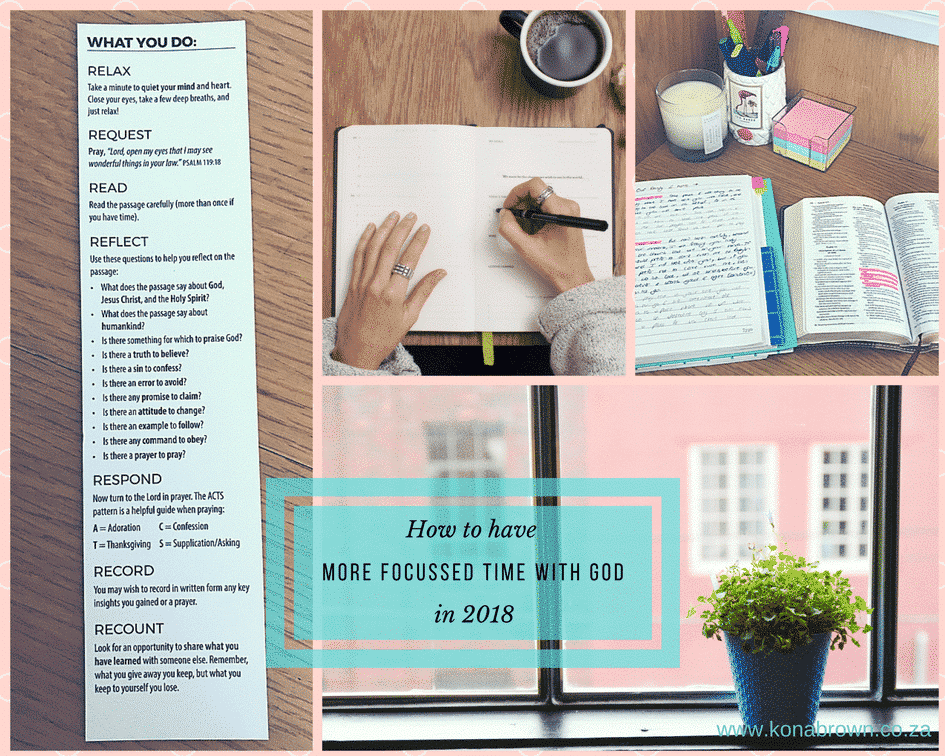

 Did you know that I wrote a book about this and other topics, from culture to current affairs, from faith to friendship, to help you have gospel lead and Bible based conversations with your kids?